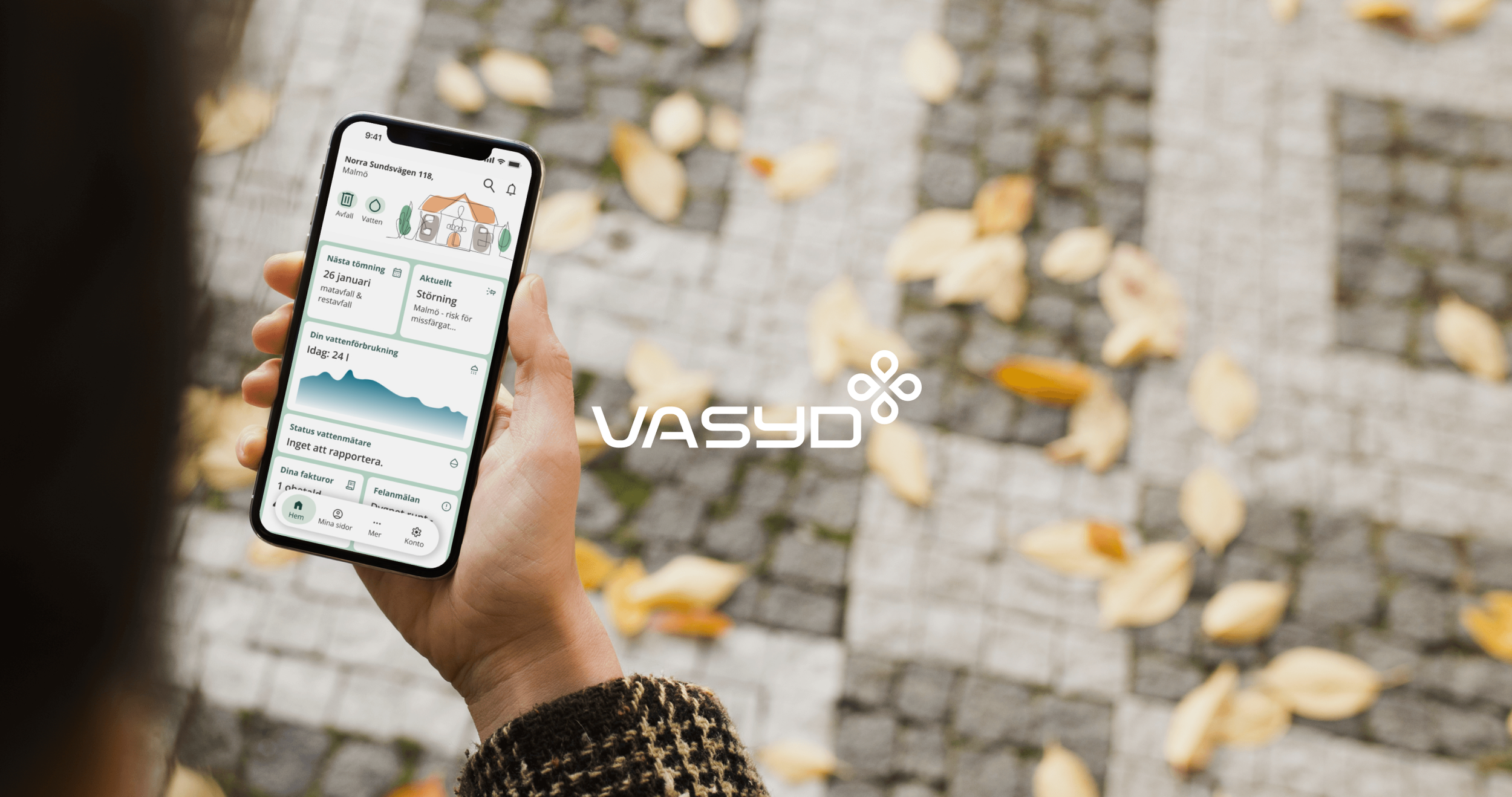
VA SYD
Project overview
VA SYD is an association of municipalities that provides water supply and collects household waste in a few municipalities in Skåne Län, Sweden. Their customers have one way to perform e-services related to water and waste via vasyd.se. Their current app does not allow customers to perform e-services.
The mission for this project was to integrate VA SYD's e-services into the app to make it easier for customers to perform the services they want to handle digitally, as well as to explore a new take on the app’s design.
Brief
Integrate VA SYD's e-services into the app in a clear and accessible way that meets WCAG 2.1 and WCAG 2.2. In addition, explore a new visual design using their current palette.
Team
Susanne Siljeland
Malte Gustavsson
Filippa Hugert (me)
Time duration
Nov 24 2025 - Feb 13 2026 | 10 Weeks
Role
Researcher
Workshop Facilitator
UX/UI Designer
Process
All steps during this project followed the Design Thinking process.
Challenge
A challenging part of this project was to motivate why their customers should use the app in the first place, rather than the well-known website. Due to the fact that VA SYD is a municipal actor, their customers are forced to use VA SYD as their water supplier and waste collector, so we needed to make the app easy to use in a fun way that adds true value.
Empathise.
Research
By conducting market and competitive research along with stakeholder interviews and data from VA SYD’s customer support team, we aimed to get comprehensive information that would lead us in the right direction to creating a solution grounded in reality.
Research goals
Scan the market to gain an overview of how other actors address design challenges and functionality related to app-based e-services.
Understand how these actors collect information from different sources and communicate it to customers in the most effective way.
-
![]()
Secondary Research
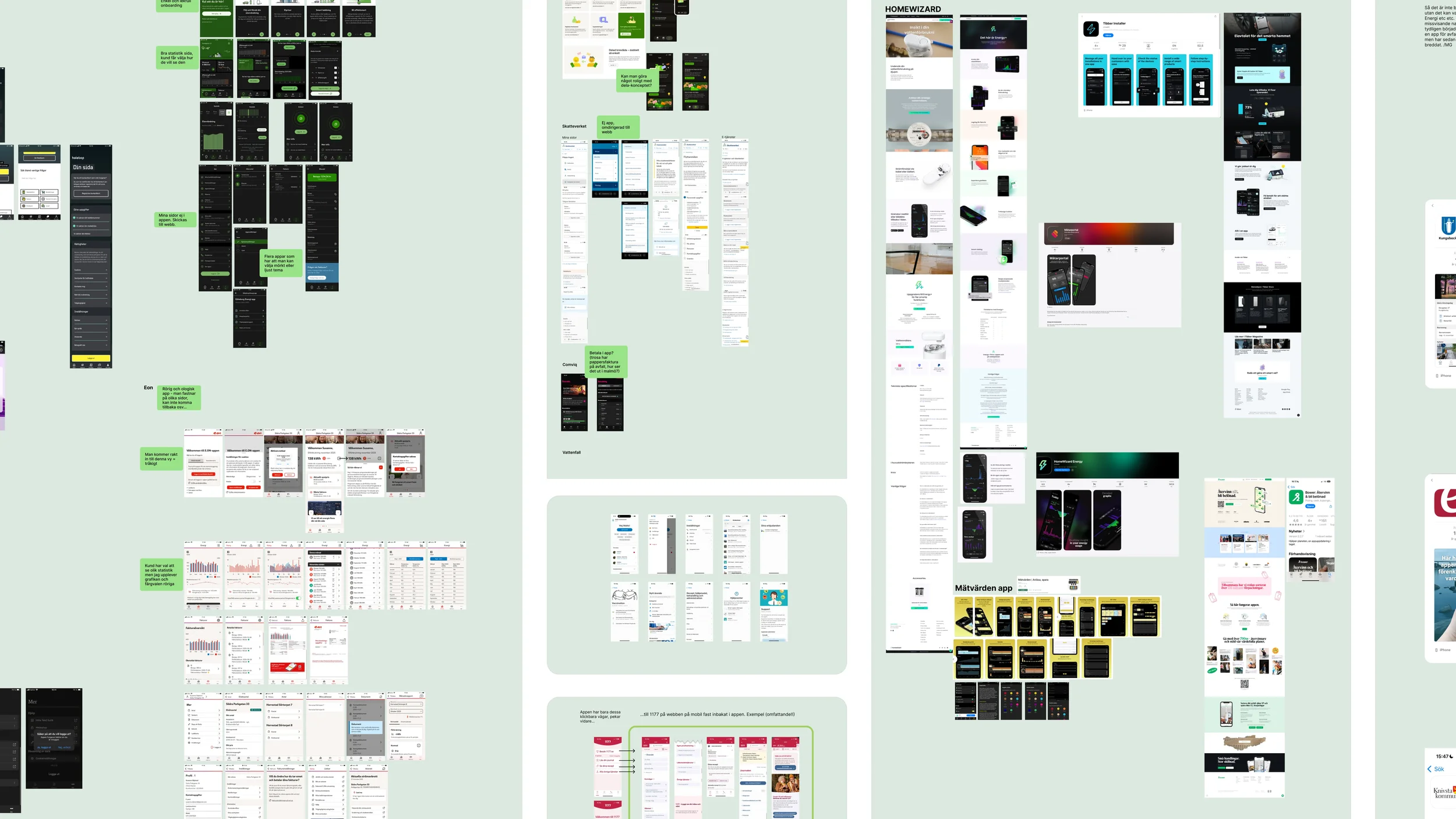
We aimed to gather as much information about how others in the market design and communicate their solutions functionally and visually.
-
![]()
SWOT Analysis
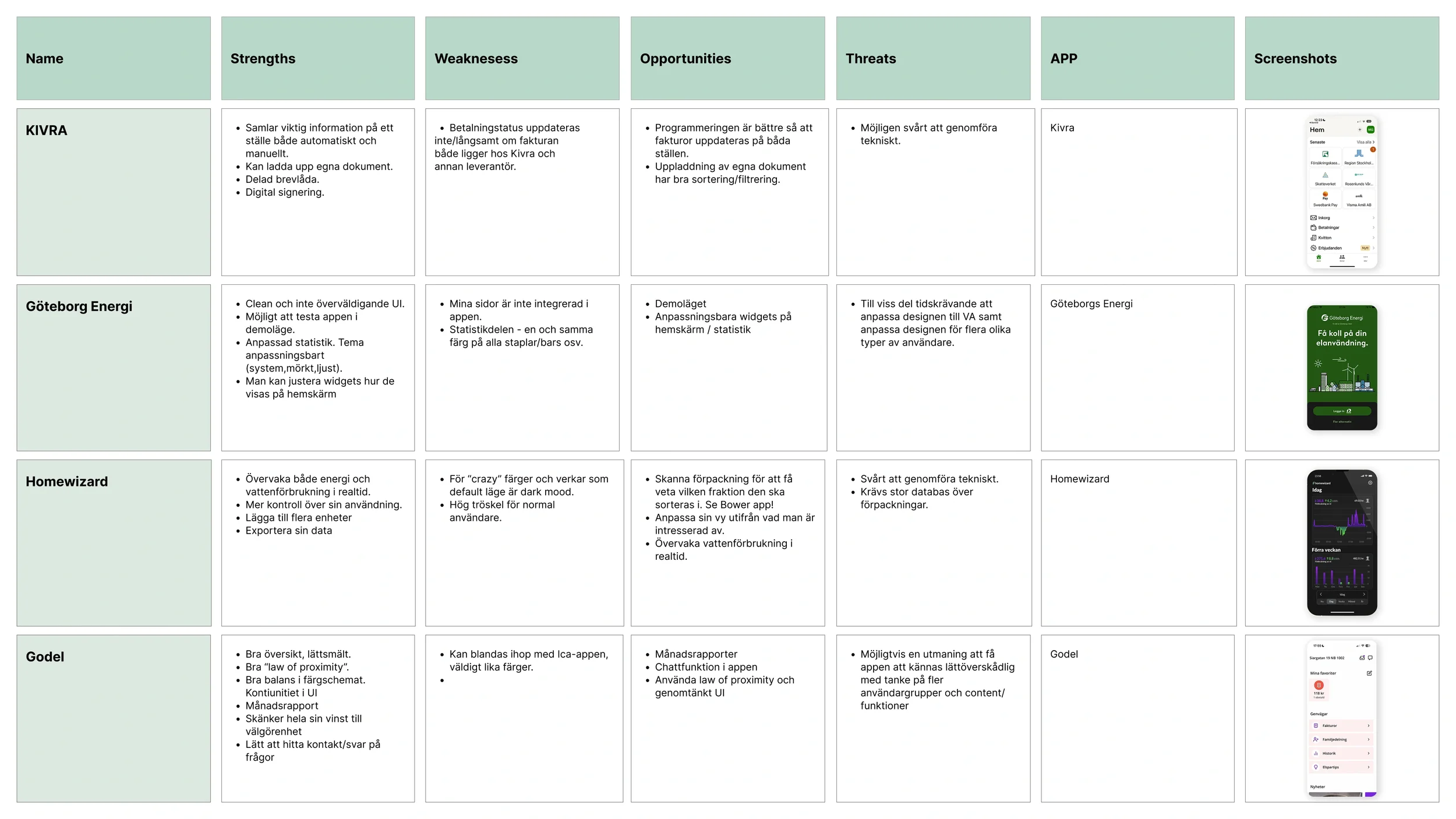
Identified opportunities: Our SWOT analysis showed what features we could use to our advantage, such as a demo mode, customisable widgets, and statistics such as water usage in real-time.
-
![]()
Affinity Mapping
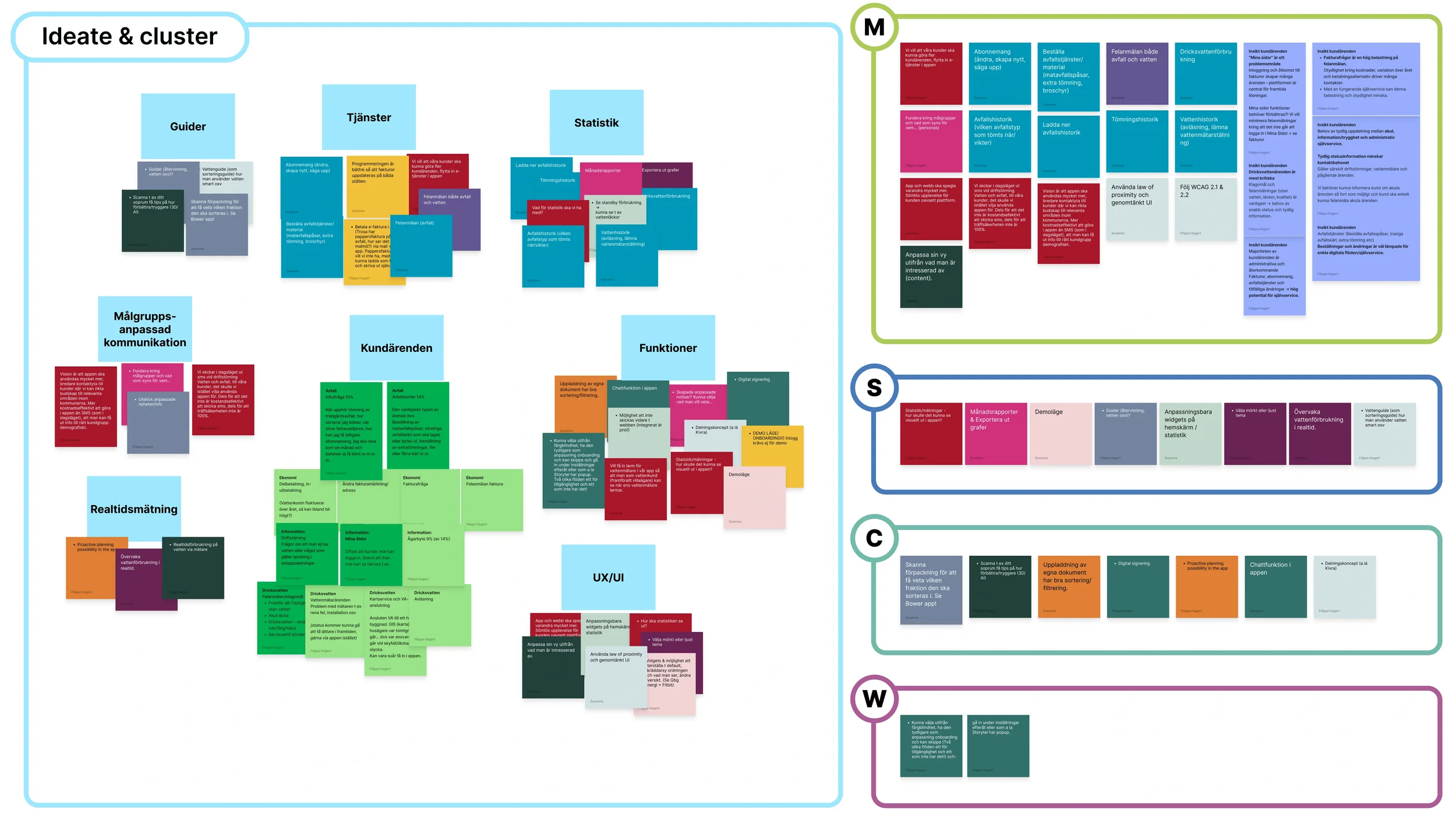
Moving forward, we did an affinity mapping exercise to group findings from our research and ultimately prioritising what features we should bring into the design using the MoSCoW technique.
Findings
– Personalisation
Customers need access to relevant and tailored information from VA SYD. Personalisation adds significant value to the experience.
– Distinguish features
A clear need to distinguish between three types of customer interactions:
urgent matters
information
administrative self-service.
– Preventive measures
Most support cases could have been prevented with better upfront information, real-time status updates, and a clear division of responsibilities.
Define.
Personas
VA SYD target customers are anyone living in the county where they operate and anyone who therefore needs to use VA SYD’s services. They also work with business owners (e.g., property owners and large industries).
Together with VA SYD, we decided to create the primary persona as a private individual and focus on building the app for them.
Primary persona
The primary persona is the typical homeowner living in one of VA SYD’s counties.
Secondary persona
To future-proof and ensure the app would be scalable, we created a second persona that targets business owners’ employees that has the responsibility for the water and waste contracts.
Problem Statement
VA SYD's customers are currently unable to access key e-services directly within the app and are instead redirected to My pages on the web. This breaks the in-app experience and creates friction for users who expect to complete tasks seamlessly within a single platform. Resolving this issue is important to ensure VA SYD delivers a consistent, intuitive, and seamless customer experience regardless of whether customers choose to use the app or the web.
How might we-questions
How might we use personalisation to turn VA SYD's information into meaningful added value for customers?
How might we make it easier for customers to perform their services digitally?
How might we deliver relevant information to targeted customer segments more cost-effectively?
Ideate.
Concretising the idea
Reverse brainstorming
Information architecture diagram
User flow
Sketches
IA & User flow
Before we started sketching, the foundation for the app was laid out, and its content was structured in an information architecture diagram. We created a user flow for upcoming testing.
Information architecture diagramUser flowSketches
We roughly sketched out a first draft of the app’s look and feel with pen and paper before moving on to wireframing.
Prototype.
Lo-fi wireframes
Based on our sketches and the user flow, a wireframe prototype was built.
Test.
Usability testing
The lo-fi wireframes were printed out in order to do a paper testing session with participants fitting the primary persona. The feedback from the session was iterated on the wireframes before moving on to the high-fidelity design.
Final design
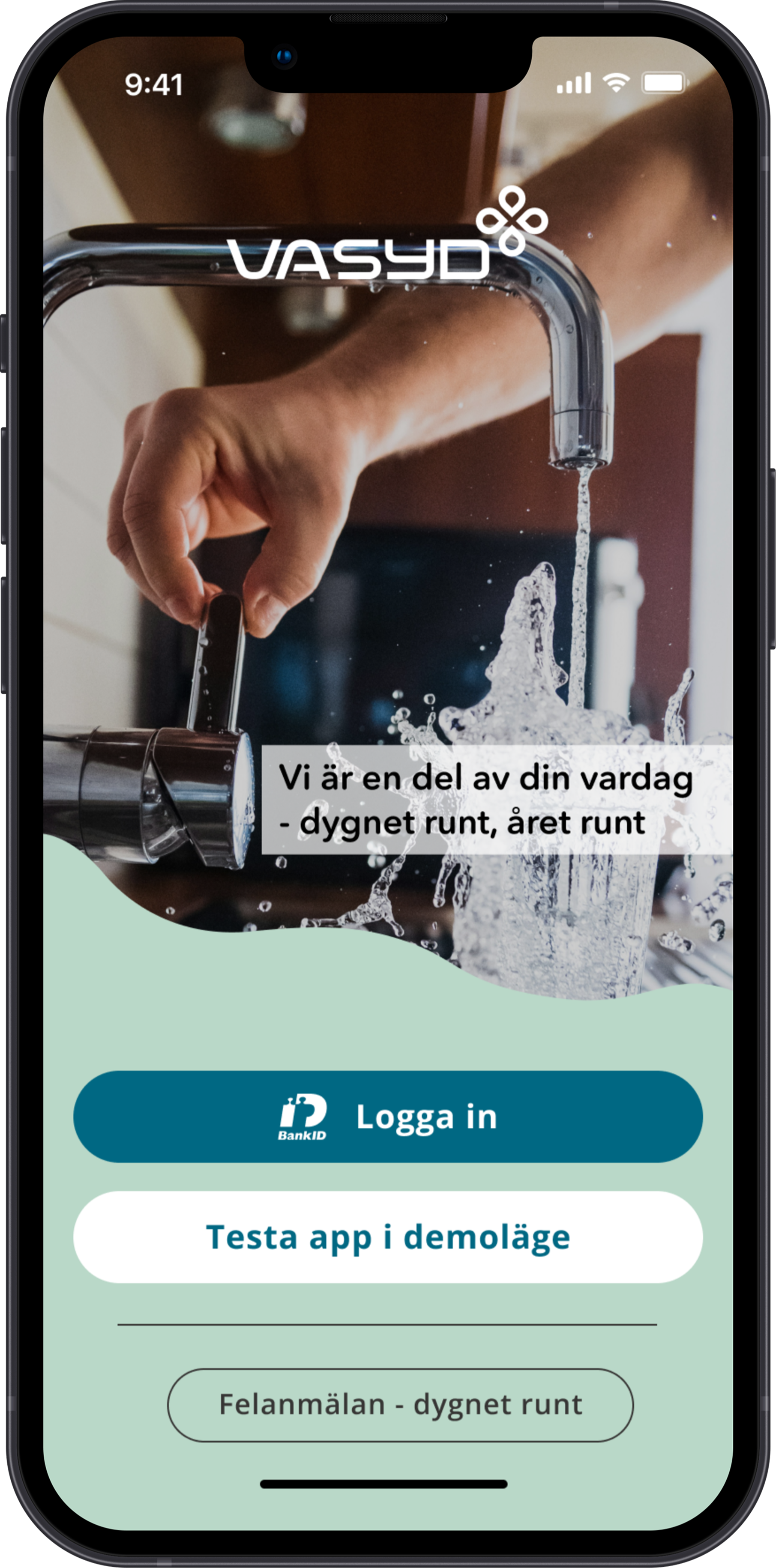
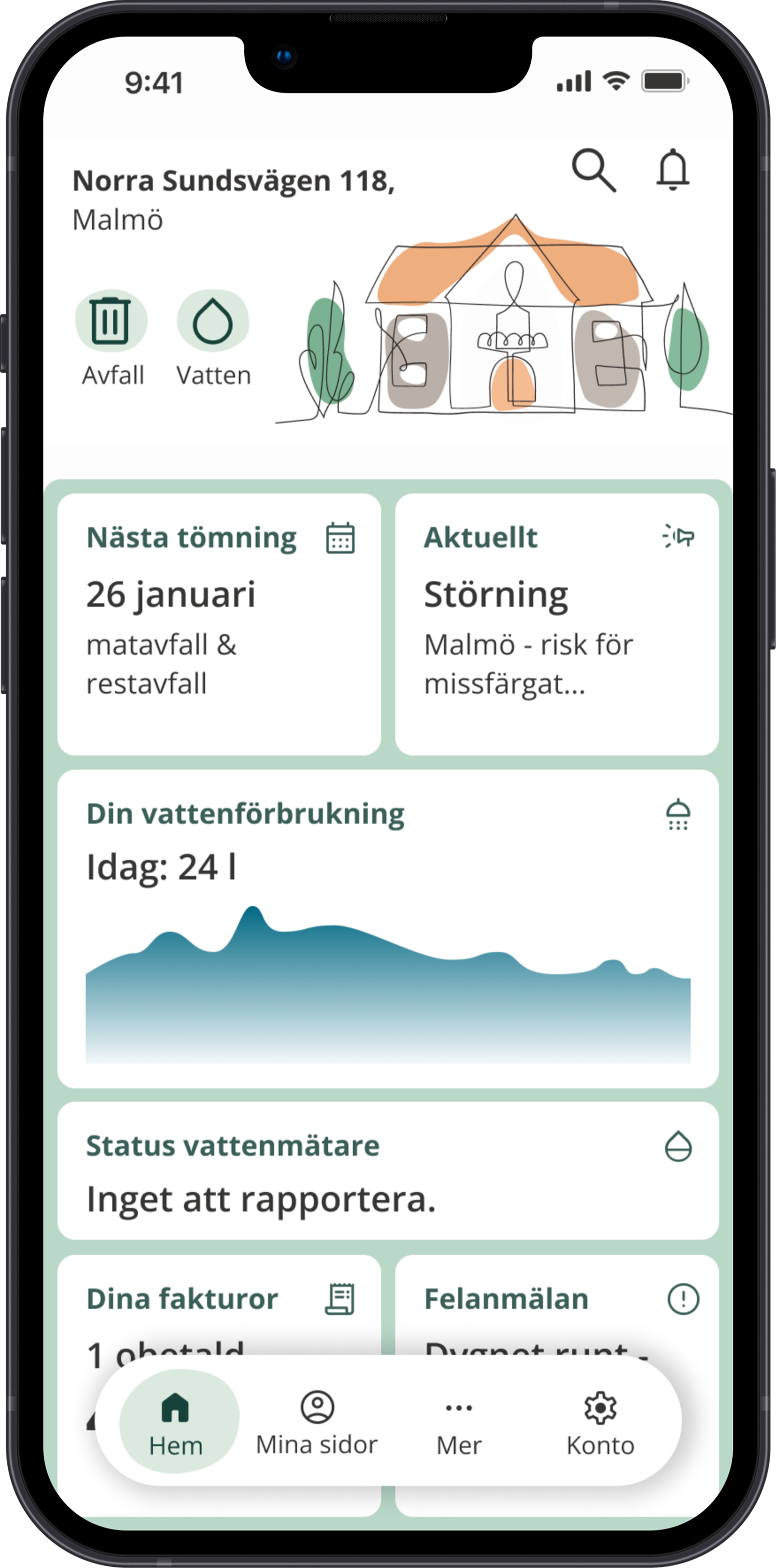
The iterated and final design is a refreshed take on VA SYD’s current tone and visuals, grounded in real user needs, solving pain points expressed by customers, and providing VA SYD with an additional communication channel.
The app was designed to be personalised using widgets, containing relevant information in an accessible and satisfactory way.
Navigable prototype